Taylor Insurance
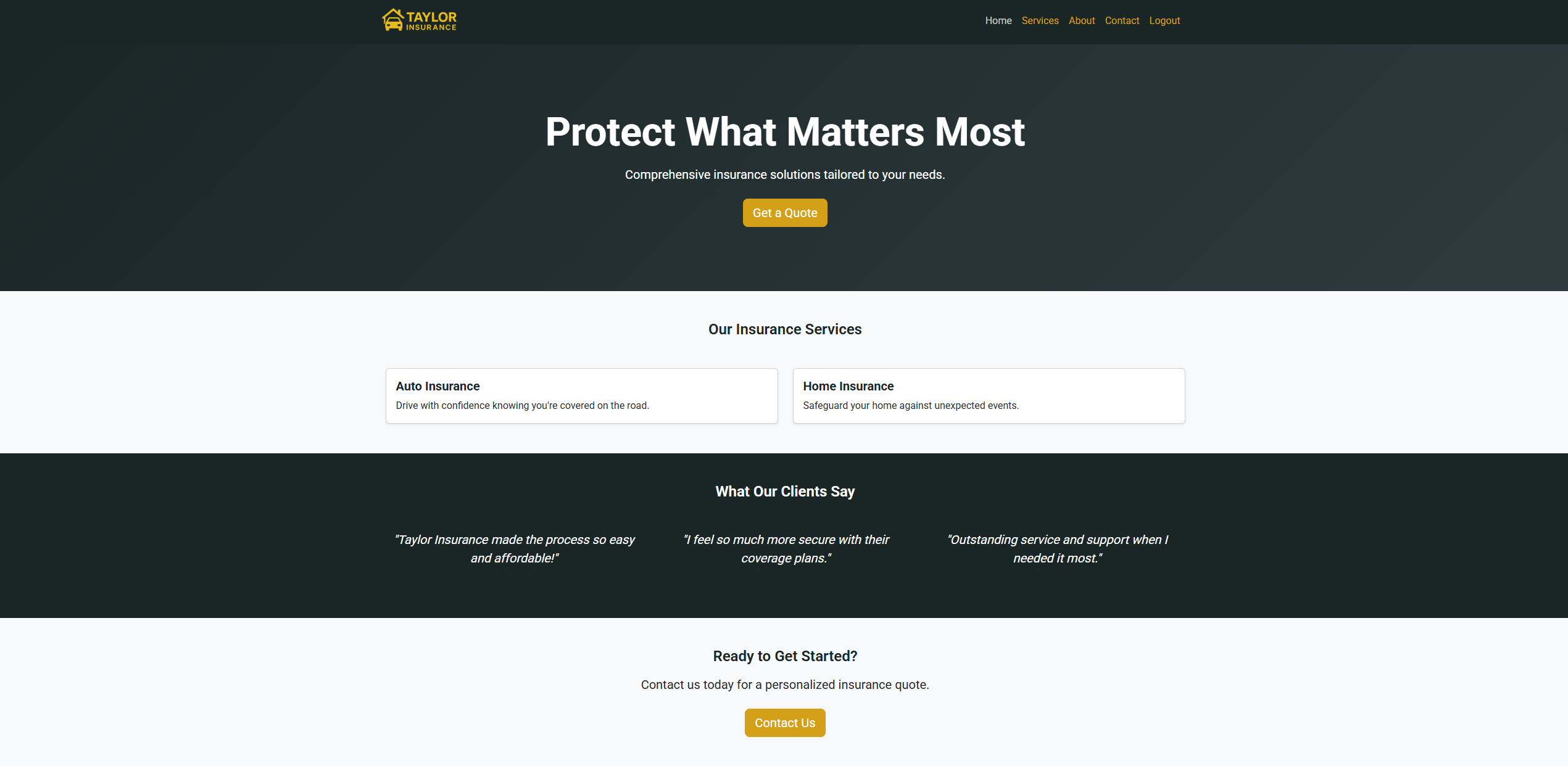
Full-stack insurance management platform built by a team of four as a final-year capstone. I owned the entire frontend, built the API layer connecting it to the backend, and deployed it to AWS independently after submission. Every team built the same spec. Ours was best in class.
 Click to enlarge
Two interfaces. One backend.
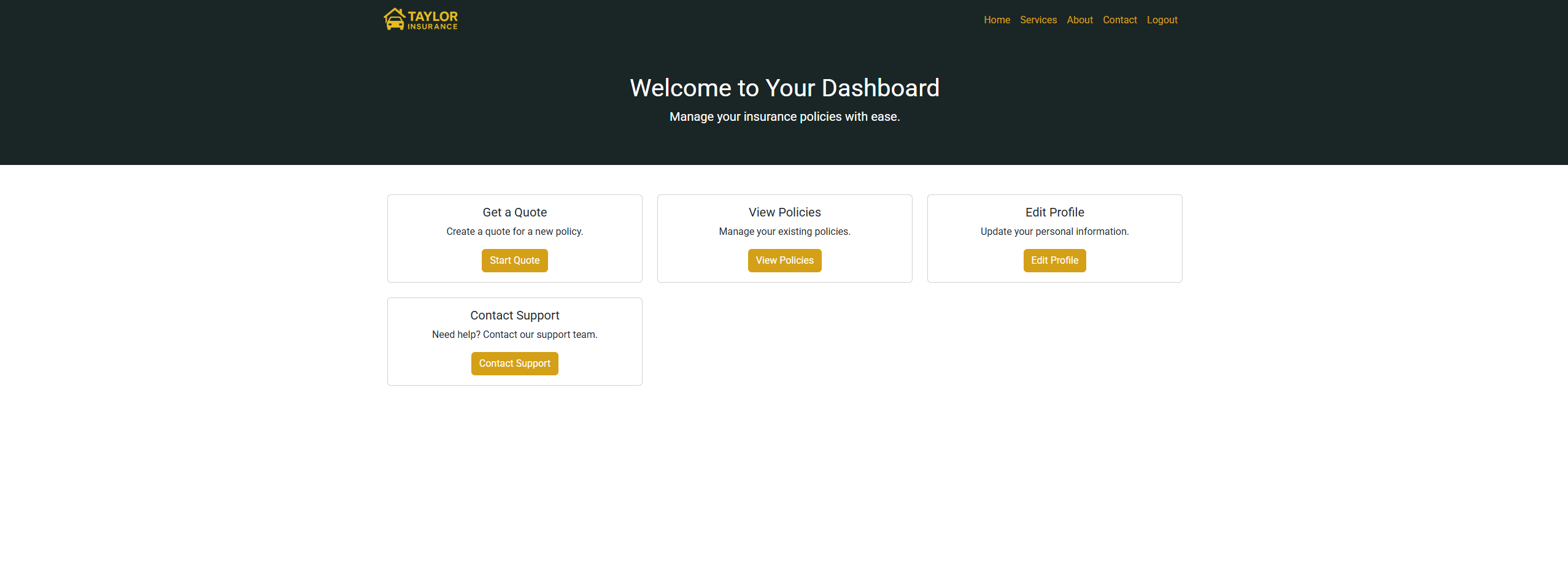
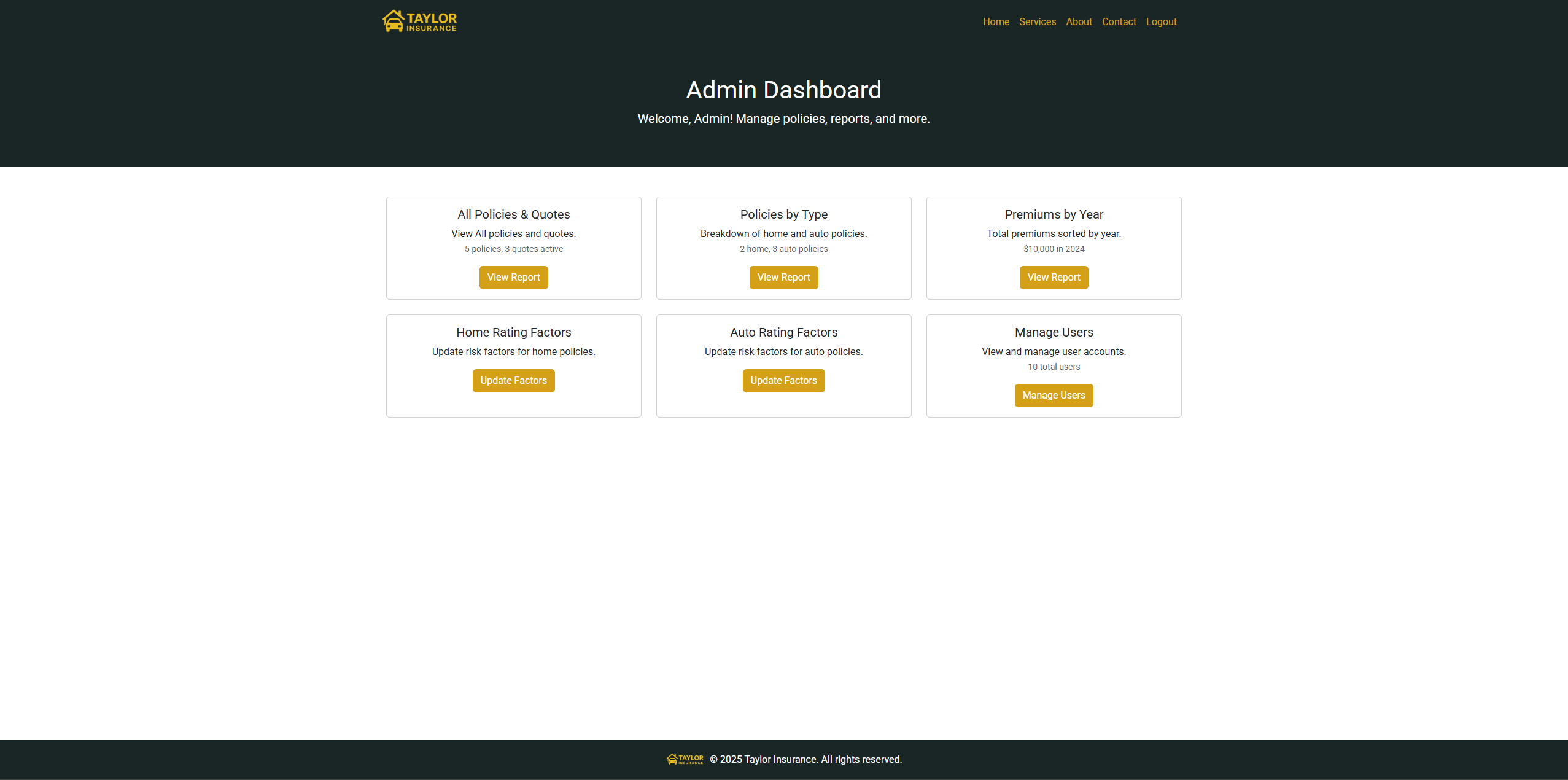
The app splits into a customer-facing portal and a separate admin panel, both hitting the same Spring Boot REST API. Customers go through the full policy lifecycle. Admins control the system behind it.
 Click to enlarge
- Get instant quotes for auto or home insurance
- Purchase and activate policies in one flow
- View, renew, or cancel existing policies
- Edit profile and contact support
 Click to enlarge
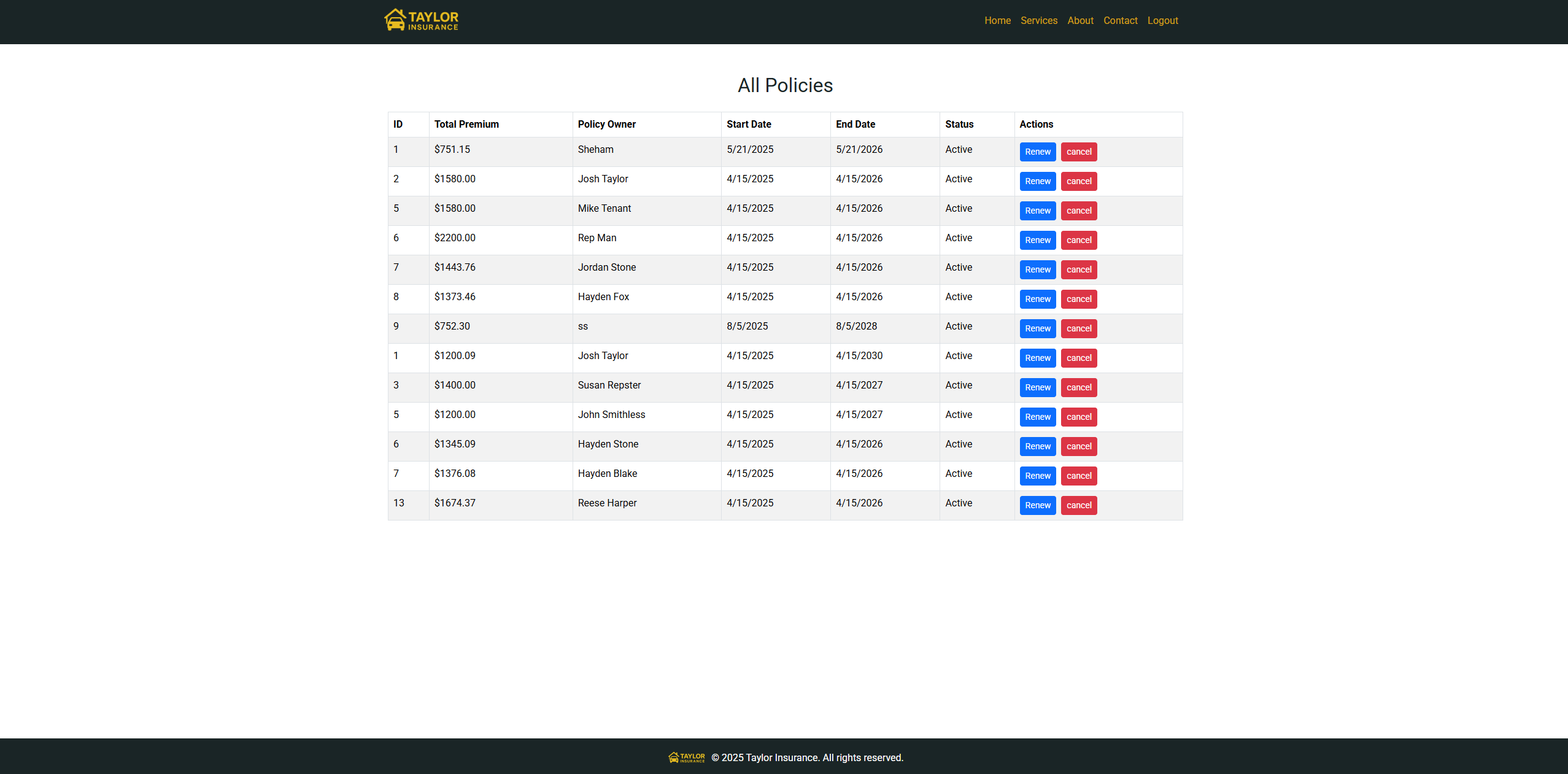
- View all policies and active quotes across all users
- Policies broken down by type, premiums by year
- Update the rating factors that drive the quote formula
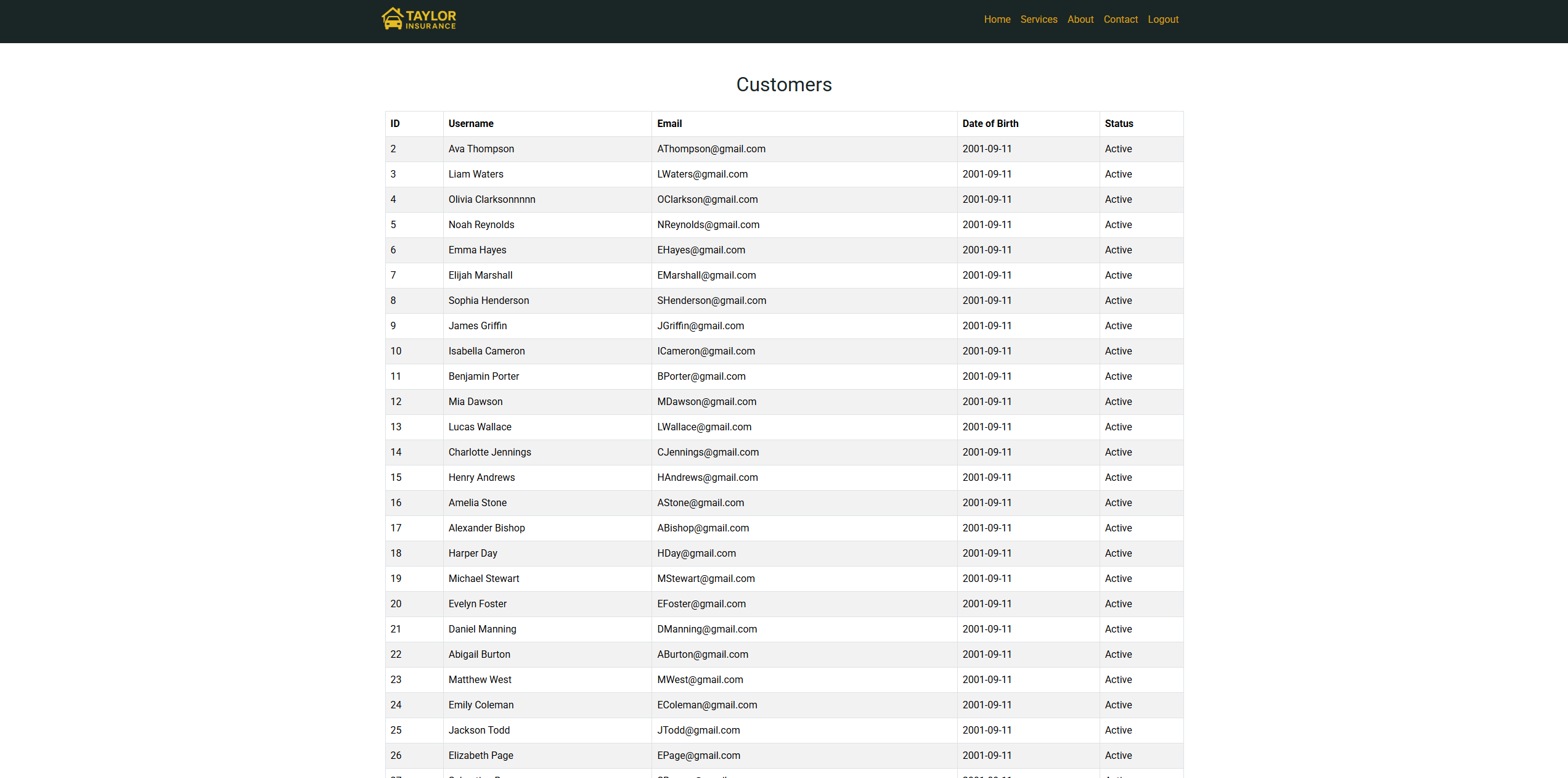
- Manage all user accounts
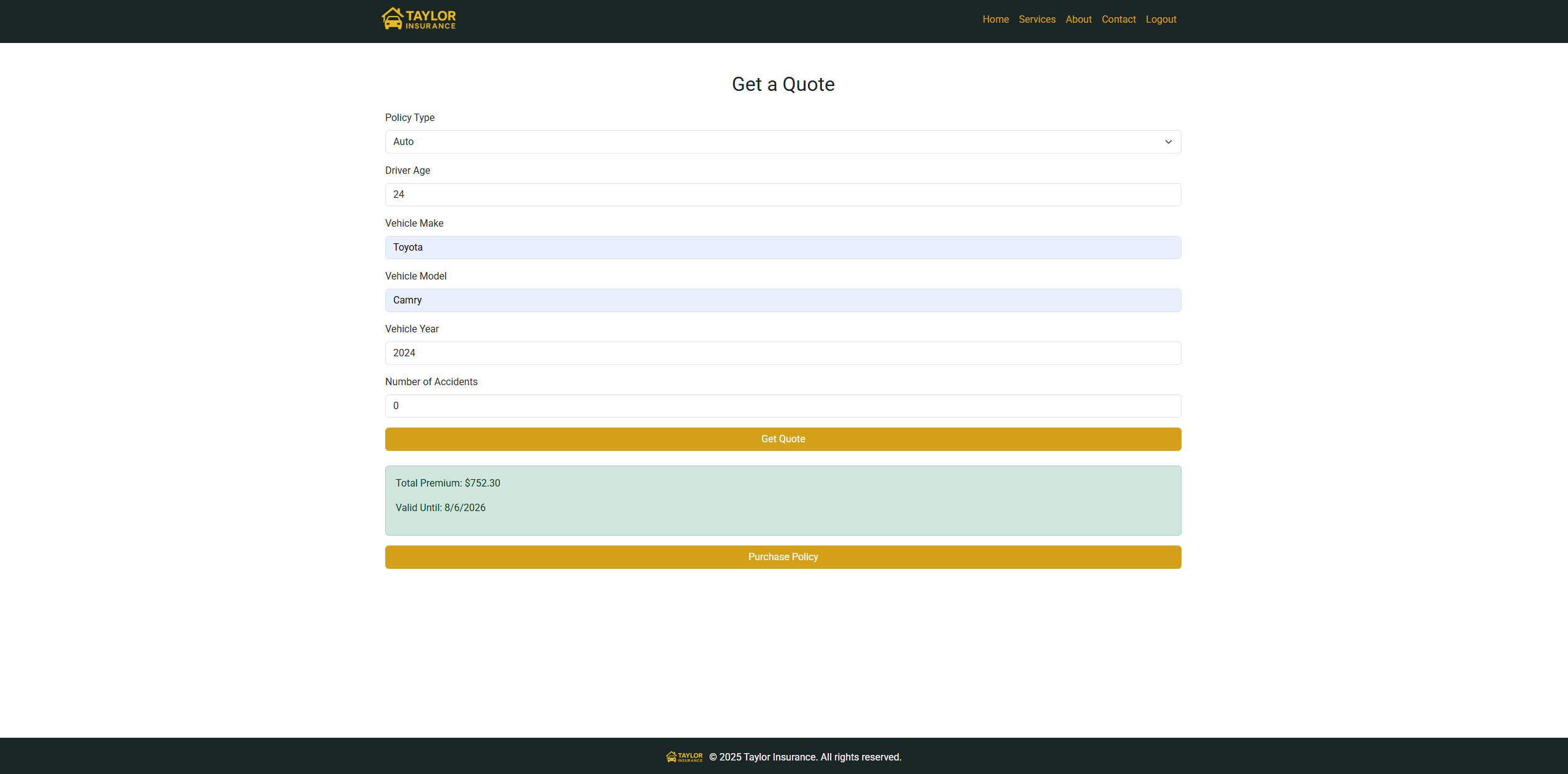
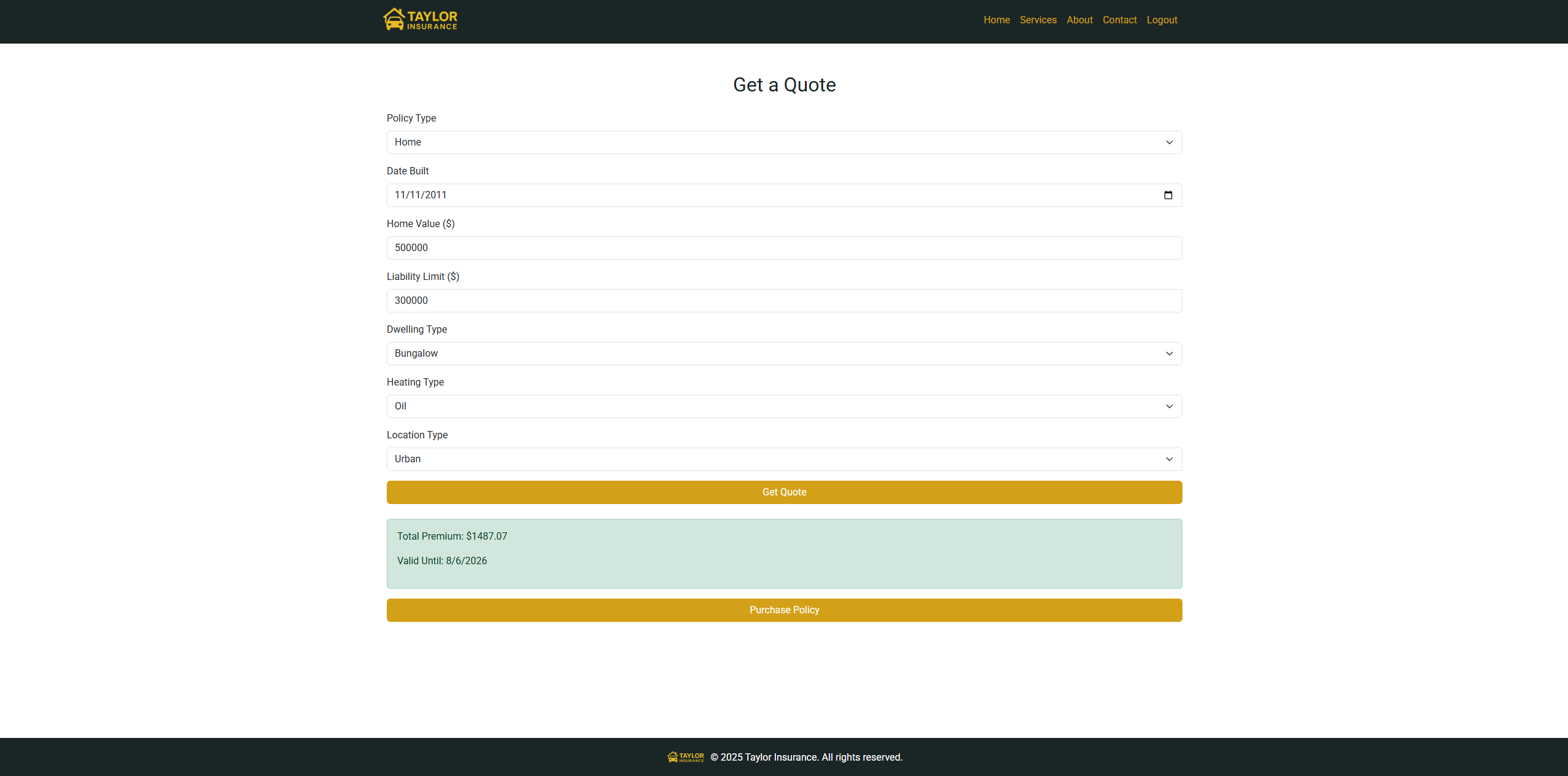
Quote. Calculate. Purchase.
Customers fill in their details and get an instant premium. Admins control the rating factors behind the formula. Change a multiplier and every future quote reflects it immediately, no code change required. I built the frontend side: the forms, the API calls, and displaying the result.
 Click to enlarge
 Click to enlarge
What it's built with, and why.
I owned the entire frontend: component structure, routing, and all the API calls connecting the UI to the Spring Boot backend. First time building a full SPA against a REST API I was also actively contributing to.
Part of the project requirements. The backend was the team's domain. My contribution was the API layer the frontend depended on, plus debugging and fixing backend issues that surfaced during integration.
Part of the project requirements. Policies, users, quotes, and rating factors all have clear relationships. The relational model fit the domain well and I got hands-on experience writing queries against a real production-style schema.
Not part of the original capstone requirements. I deployed it independently afterward: React frontend on Amplify, Spring Boot backend on an EC2 instance, and MariaDB on RDS. A real three-tier deployment, set up from scratch as a personal learning goal.
The full flow.
.png) Click to enlarge
Click to enlarge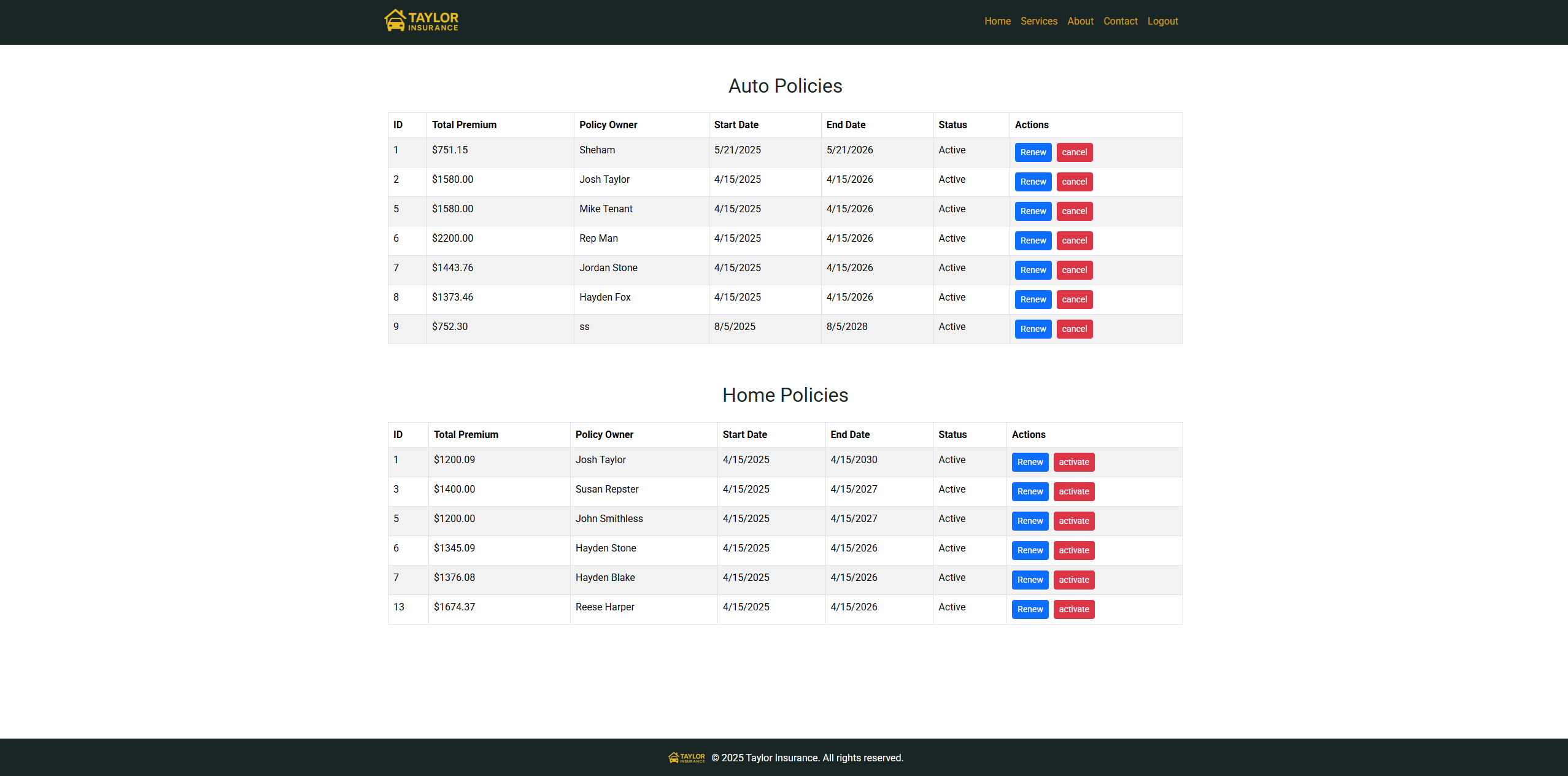 Click to enlarge
 Click to enlarge
 Click to enlarge
What worked. What I'd change.
About Josh Taylor.
The company was named after our instructor, Josh Taylor. My teammates took it further than anyone expected. They wrote him a complete fictional biography: founder of Taylor Insurance in 2005, deep roots in Newfoundland and Labrador, a background in business, and a vision to put people before policies. The about page shipped with the project.
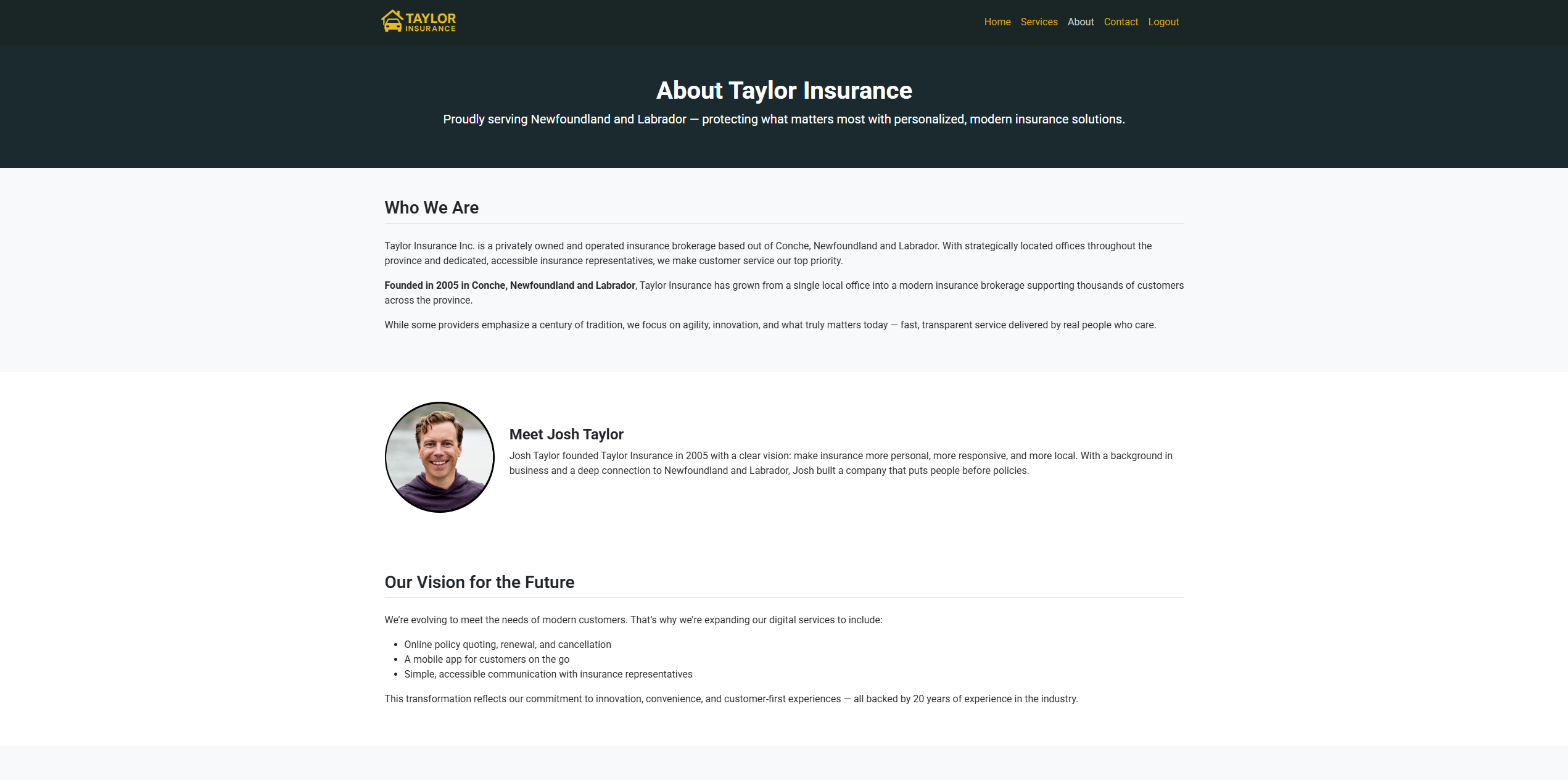 Click to enlarge